
This year marked one of the most significant periods of progress for the Te Wairoa River Restoration Project. Launched in response to the devastating floods of 2023 at Camp Adair, the project was born from the need to restore a river system that had been under strain for decades and to reconnect people, place and learning along the way.
The flooding exposed just how compromised the mid-catchment section of the Te Wairoa River had become. In response, a long-term restoration programme was established, focused on stabilising waterways, rebuilding native habitat, and strengthening community connection to the awa.
Tackling Crack Willow
A major focus this year was the large-scale removal of invasive Crack Willow, which had long choked river edges and restricted natural flow. Across the catchment, 18 kilometres of river and stream edge were treated, with 38 hectares of dense willow controlled - the largest single intervention in Te Wairoa’s recent history.
This work has reopened buried sections of the river, improved flood resilience, increased sunlight and helped kick-start the return of native species, including wetland plants, tuna and kōura.
Growing a New Forest
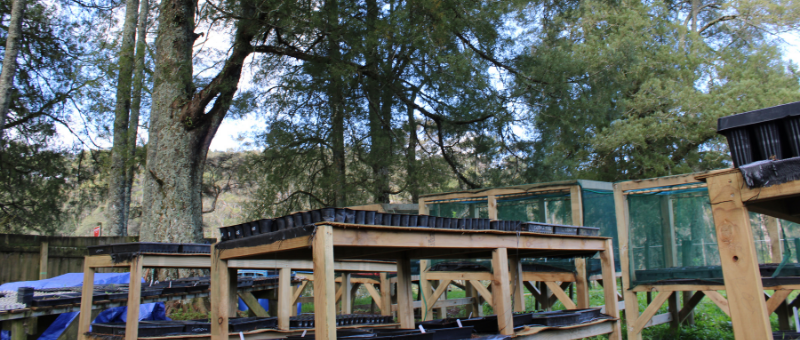
The on-site native nursery at Camp Adair quickly became the heart of the project. Nearly 10,000 seedlings were pricked out and re-potted this year, while hundreds of thousands of eco-sourced seeds were collected for future planting. Volunteers played a huge role, contributing hundreds of hours to germinating, watering and caring for young natives.
Nature’s Classroom: Learning Through Action
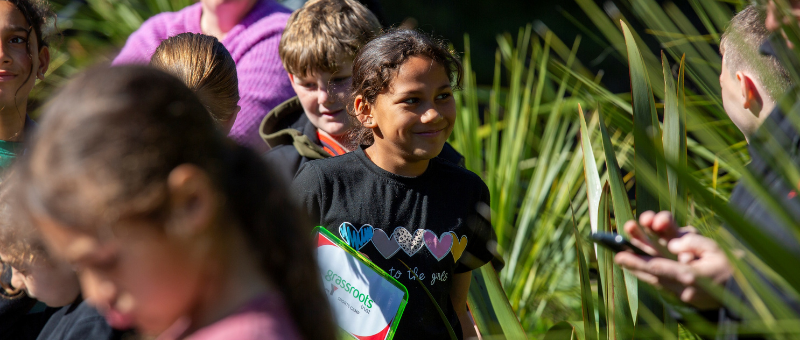
Thanks to the support of Counties Energy, the environmental education programme Nature’s Classroom expanded to eight schools and more than 200 students this year. Tamariki took part in freshwater testing, species identification, riparian planting and orienteering-based native discovery.
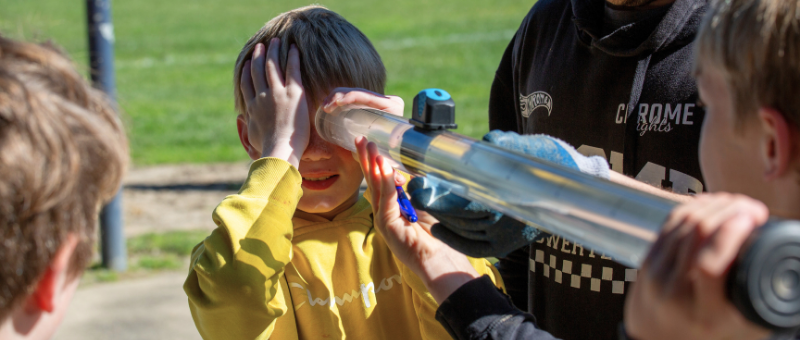
Each school planted around 400 eco-sourced natives, directly contributing to restored river margins. Students left with hands-on skills, deeper ecological understanding, and a strong sense of kaitiakitanga for the Te Wairoa River.
Volunteers and Community Partnerships
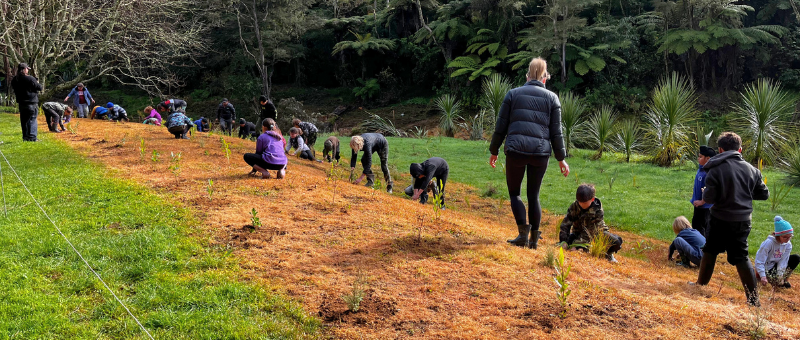
This work would not have been possible without the support of volunteers and community partners. Over the year, 42 volunteers contributed more than 400 hours across planting days, nursery work and catchment maintenance. One community planting day alone saw more than 1,000 natives planted in just 90 minutes.
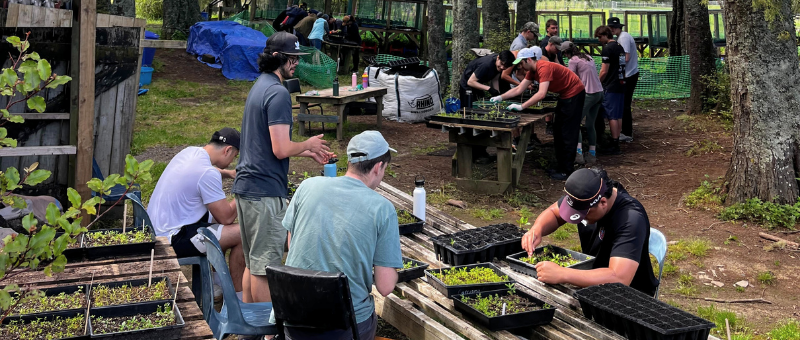
Partnerships with Friends of Te Wairoa, Hūnua, Ararimu, & Paparimu Valley Residents Association, Te Ara Hīkoi, Frankin Local Board, and Predator Free Franklin brought expertise, predator-control resources, and local knowledge to the project. Corporate volunteer days also contributed both labour and funding through multi-day bookings at Camp Adair.
Looking Ahead
In 2026, restoration work will extend further upstream, beginning with Hūnua Stream in January. Riparian planting will continue across restored sites and exploration of a new nursery will begin after the holiday break. Nature’s Classroom will also continue to grow, deepening its connection with local schools.
With stronger partnerships, increased volunteer involvement, and a growing nursery system, the Te Wairoa River Restoration Project is well-positioned for another year of environmental recovery, learning, and community connection.